Stop Blending In: How a Sharp Point of View Turns Your Creative Identity into a Magnet
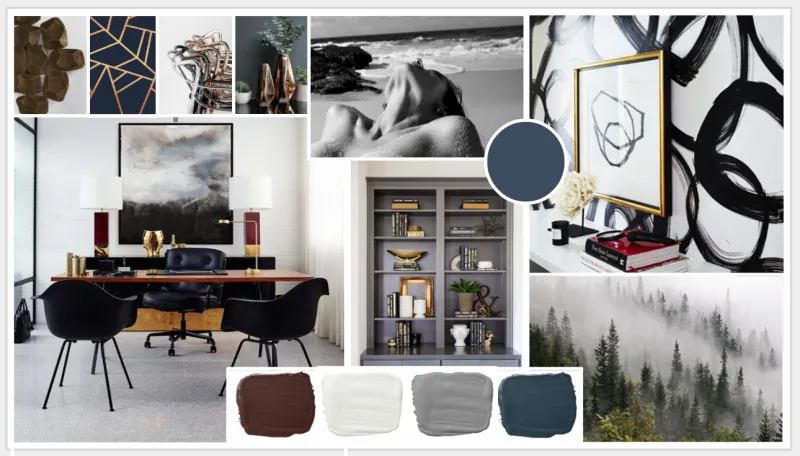
Photo: creative professional personal branding desk workspace with mood board, via i.pinimg.com
Scroll through Instagram, LinkedIn, or any corner of the creative internet for about five minutes and you'll notice something kind of exhausting: everything looks the same. The same neutral tones, the same hustle-culture captions, the same "I help [insert audience] achieve [insert vague outcome]" bios.
It's not that these people aren't talented. Most of them probably are. The problem is they've confused visibility with identity — and those two things are not the same.
Building a personal brand that actually resonates — one that draws people in and keeps them around — starts with something way more uncomfortable than picking a color palette. It starts with having a clear, honest, sometimes polarizing point of view.
What "Point of View" Actually Means (And What It Doesn't)
Let's clear something up. A point of view isn't your aesthetic. It's not your niche. It's not even your story, exactly.
Your point of view is the lens through which you see your craft, your industry, and the world — and it's the thing that makes your take on any given topic distinctly, unmistakably yours.
Think about it this way. Two photographers can both shoot portraits. One believes photography is about capturing vulnerability in stillness. The other believes it's about freezing joy at its loudest. Both are technically doing the same job, but their work feels completely different — because the philosophy behind the shutter is different.
That philosophy? That's your POV. And when you can articulate it clearly, everything else — your content, your client relationships, your portfolio — starts to click into place.
Why Most Creative Brands Stay Invisible
Here's the uncomfortable truth: most people don't build a brand. They build a highlight reel.
They share their best work, their wins, their polished behind-the-scenes moments. And while that content might be beautiful, it doesn't give anyone a reason to choose them specifically over the hundred other talented creators doing something similar.
The creators who break through — the ones who build genuinely loyal audiences — do something different. They let their perspective lead. They're not just showing what they make; they're constantly communicating why they make it and what they believe about the work.
Take someone like Virgil Abloh. Before he became a household name in fashion, he was relentlessly clear about his philosophy: that the distance between streetwear and high fashion was exactly three percent — a tweak, not a transformation. That POV was provocative, specific, and deeply personal. It made him impossible to ignore, even before the Met Gala moments.
Or look at someone like Austin Kleon, the author and artist behind Steal Like an Artist. His entire brand is built around one idea: creativity isn't about originality, it's about influence and remix. That singular perspective turned a blog into a book deal, a speaking career, and a following of hundreds of thousands of people who feel seen by his work.
Neither of these people succeeded because they were the most technically skilled. They succeeded because they had something to say.
How to Find Your Creative POV (Without Overthinking It)
Okay, so how do you actually figure out what your point of view is? Here's a practical way to start.
Write down what frustrates you about your industry. Seriously. The things that make you roll your eyes, the advice that feels hollow, the trends that seem like noise — those frustrations are usually pointing directly at what you actually believe. If you're a graphic designer who's tired of clients chasing trends instead of building timeless visual systems, that frustration is your POV.
Notice what you keep coming back to. Most creatives have a handful of themes, ideas, or questions that show up again and again in their work. Those recurring obsessions are usually the core of your perspective. Lean into them instead of trying to diversify away from them.
Say the unpopular thing. Not for shock value — but because genuine points of view often involve disagreeing with conventional wisdom. If you believe something different from the mainstream narrative in your space, say so. That's where the interesting conversations start.
Consistency Is the Vehicle, Not the Destination
Once you've got a sense of your POV, the next job is showing up with it consistently — across your content, your portfolio, your client communication, even your social media bio.
Consistency doesn't mean being repetitive. It means that no matter where someone encounters your work, they get the same feeling about who you are and what you stand for. Your Instagram and your website and your email newsletter might look different, but the underlying philosophy should feel like it's coming from the same place.
This is where a lot of creatives stumble. They nail the POV but then shift it every few months chasing a new trend or trying to appeal to a broader audience. Every time you dilute your perspective to please more people, you make yourself less memorable to the ones who would have genuinely loved you.
Storytelling Is How POV Becomes Connection
Having a clear perspective is one thing. Making people care about it is another — and that's where storytelling comes in.
The most effective personal brands aren't just broadcasting their philosophy like a manifesto. They're illustrating it through stories: client projects that reflect their values, personal experiences that shaped their approach, even failures that clarified what they actually believe.
If your POV is that good design should be invisible — that it works best when people don't notice it — don't just say that. Tell the story of the project where you stripped everything back and watched the client's message land harder than ever. Show the before and after. Let people experience the idea, not just hear it.
That's the difference between a brand and a biography.
Your Brand Is a Living Thing
Here's the last thing worth saying: your personal brand isn't a document you file away after a weekend of soul-searching. It evolves. Your POV will sharpen over time. The way you communicate it will get more refined. Your audience will help you understand which parts of your perspective resonate most.
The goal isn't to get it perfect before you start showing up. The goal is to start showing up with something real — some honest, specific, genuinely yours perspective on your work and your world.
Because in a digital landscape full of people blending in, the most radical thing you can do is be unmistakably yourself.
And that's exactly the kind of creative vision worth building around.